What it carries
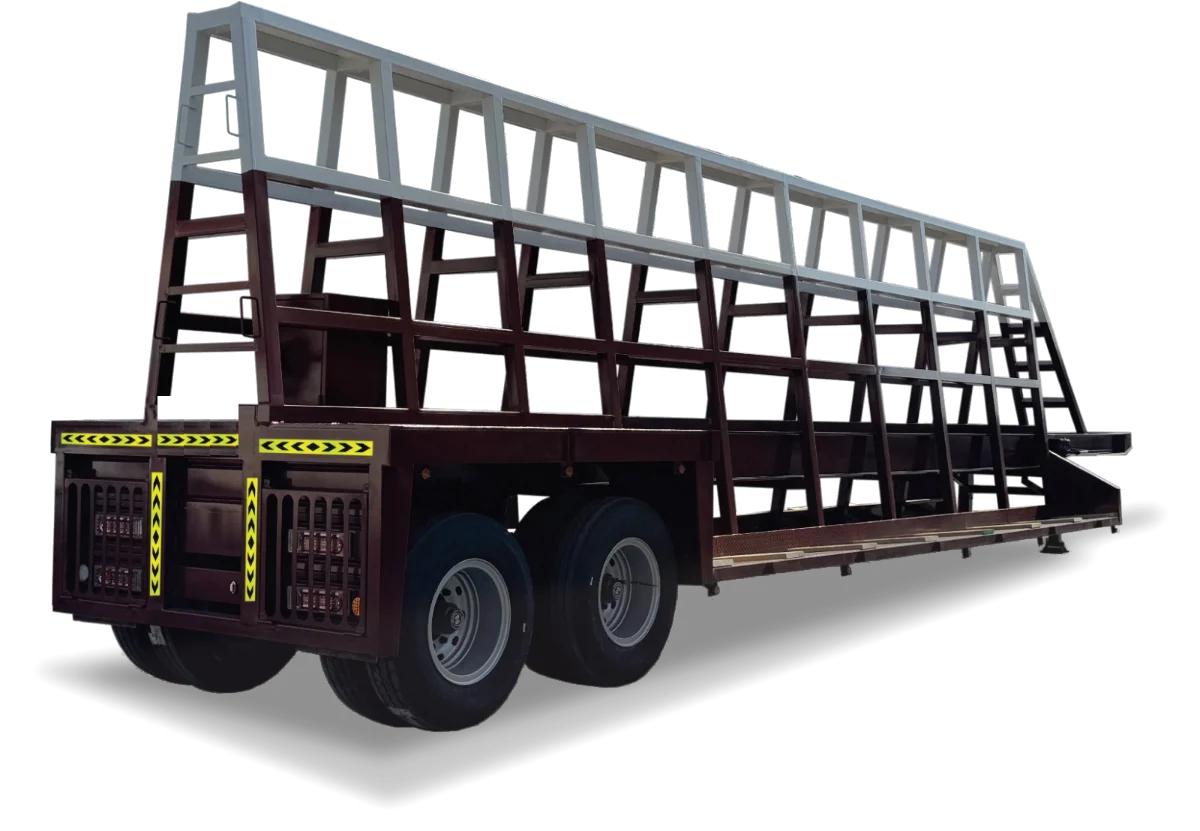
Pipe and tube bundles, flat and box glass, structural steel sections, and any long load that needs vertical support rather than a flat bed. If the cargo is taller than it is stable, this is the trailer for it.
How we build it
The A-frame rack is fabricated and welded as part of the chassis rather than bolted on afterwards, so load forces run into the main frame. Lashing hooks are positioned to your cargo, not to a standard pattern — tell us what you are carrying and where the straps need to land.
Specifying yours
Axle count, deck length, rack height and hook spacing are all set per order. If you are unsure what the load needs, send us the cargo dimensions and weight and we will come back with a recommendation.
Getting the rack height right
Rack height is the decision that matters most, and it is the one buyers most often get wrong. Too low and tall bundles sit above the support where it does them no good; too high and you are carrying steel you never load against, adding tare weight and raising the centre of gravity for no return.
The practical approach is to size the rack around the tallest load you carry regularly, not the tallest load you have ever carried once. If your cargo profile genuinely varies, tell us — a lower rack with well-placed upper hooks often handles a mixed profile better than one tall rack that suits only the extremes.
Lashing points and load security
Where the straps land decides whether a load rides properly. We position hooks to the cargo you actually carry rather than to a standard pattern, because evenly spaced hooks on a catalogue trailer rarely line up with the strapping points on a real pipe bundle or glass crate.
Tell us the bundle width, how many bundles sit side by side, and where your drivers prefer to throw straps. That conversation takes ten minutes at the quotation stage and saves your drivers fighting the trailer for the next ten years.
Axle configuration and payload
Tandem axle is the common configuration for this trailer and suits the rated capacity above. Other configurations are available where the payload, the axle loading rules in your country, or the terrain call for them.
If you are exporting, the axle limits that matter are the ones in your own jurisdiction, not the UAE's. Tell us the destination country and we will factor it into the specification rather than leaving you to discover a problem at the border. Our GCC export page covers how buyers outside the UAE take delivery.
What happens after you enquire
Send the cargo type, the weight, the rough dimensions and the country the trailer is going to. We come back with a written specification, a price and a lead time, usually within one working day. Nothing is committed until you agree the spec — and if we think a different trailer type suits your load better, we will say so rather than sell you this one.