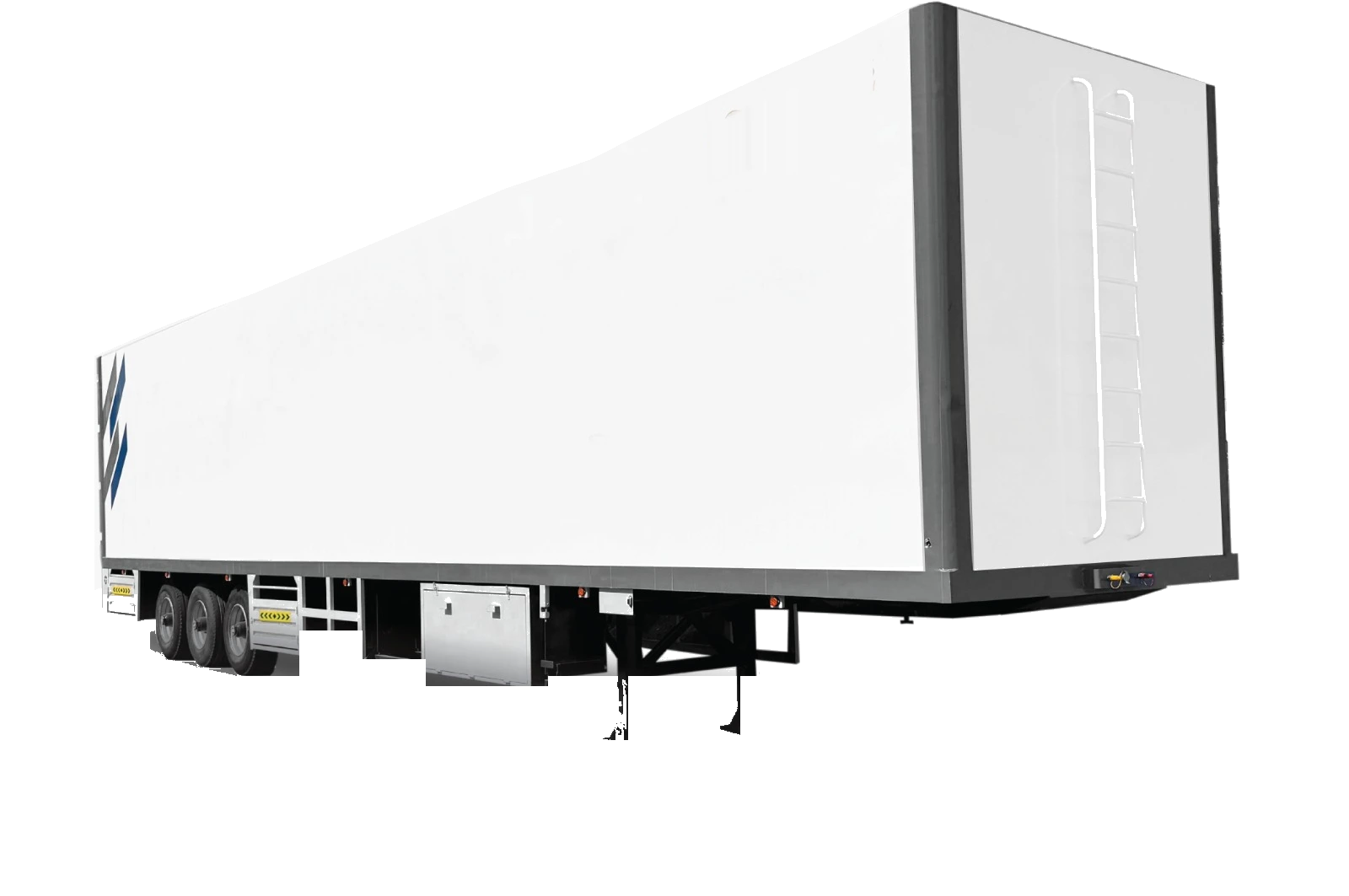
What it carries
Retail and FMCG distribution, pharmaceuticals, chilled and frozen food, and any dry cargo that needs to arrive clean and undamaged.
Insulation and cooling
We build the body insulated and prepared for a refrigeration unit. Which unit you fit is your choice — tell us the make and model at order stage and we will prepare the mounting and the aperture to suit it.
Specifying yours
Internal dimensions, insulation specification, door configuration, floor type and whether you need partitioning for mixed-temperature loads.
Deciding the insulation before you decide the unit
Buyers often choose the refrigeration unit first and treat the body as a box to bolt it onto. It works better the other way round. Insulation determines how hard the unit has to work, and in UAE summer conditions an under-insulated body means a unit running near continuously — more fuel, more wear, and a shorter service life.
Tell us the temperature you need to hold and the longest run you do in peak summer. We specify the insulation around that, then prepare the mounting and aperture for whichever unit you have chosen.
Dry freight or refrigerated
Not every box body needs cooling. If your cargo simply has to arrive clean, dry and secure, a dry freight box costs less, weighs less and carries more payload. We build the body insulated and reefer-ready when you need it and leave that out when you do not — there is no sense paying for insulation that will never be switched on.
If you are unsure, consider whether cold chain is a requirement of your customers or merely a convenience. That question usually settles it.
Door configuration
Rear barn doors are the default and suit dock loading. Side doors add access for multi-drop work where opening the full rear at every stop lets the cold out. For mixed-temperature loads, a partition lets you run two zones in one body — worth specifying at build stage, as retrofitting one later is rarely tidy.
Floor and internal finish
The floor takes the most punishment, particularly under pallet trucks. Floor type is specified per order around whether you load by forklift, pallet truck or by hand. Internal finish matters for anything that has to be washed down between loads.
What happens after you enquire
Send the cargo type, the temperature range if any, your internal dimensions, how you load, and the destination country. You get a written specification, a price and a lead time, usually within one working day. Buyers outside the UAE should read our GCC export page for how collection works.