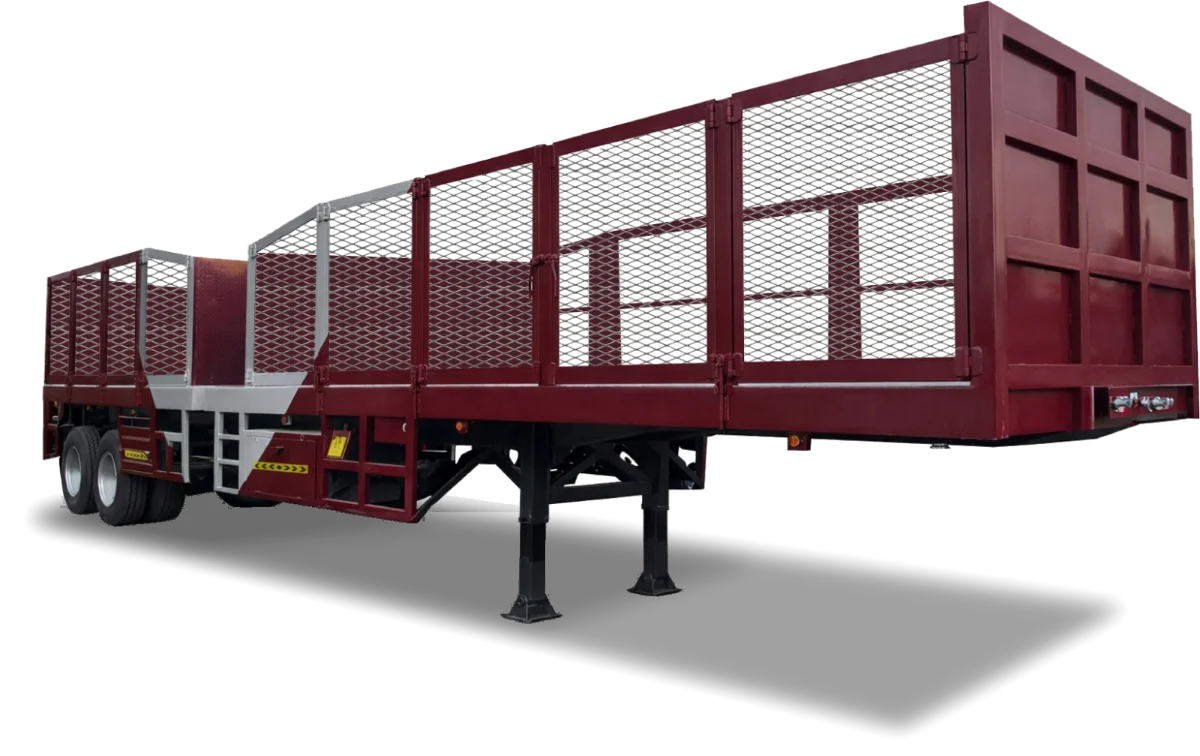
What it carries
Scrap metal, aggregate, demolition waste and bulk loose material — the loads that get dropped in from height rather than placed.
Where the reinforcement goes
Extra material where it earns its place: the side posts, the floor, and the joints between them. A trailer loaded by grab takes impact in places a palletised trailer never does, and that is where these fail if they are built to a general-purpose spec.
Specifying yours
Side height and mesh gauge, floor specification, axle configuration, and whether you want fixed or drop sides for discharge.
Why general-purpose trailers fail on this work
A trailer built for palletised freight assumes the load is placed onto the deck. Scrap and demolition waste are not placed — they are dropped in by grab from height, repeatedly, in the same few spots. The energy goes into the floor and the lower side posts, and a deck specified for even, static loading simply is not designed for it.
That is why we put the extra material where the impact lands rather than adding weight uniformly across the trailer. A heavier trailer everywhere is not a stronger trailer where it counts, and every kilo of unnecessary tare is a kilo of payload you cannot carry.
Volume against weight — getting the sides right
The side height decision depends on the density of what you carry. Light bulky material such as demolition waste fills the volume long before it reaches the axle limit, so taller sides earn their keep. Dense material like scrap steel hits the weight limit while the trailer still looks half empty, and tall sides on that work just add tare weight and tempt overloading.
Tell us what you carry most and roughly what a full load weighs. That single answer usually sets the side height.
Discharge: fixed or drop sides
How you empty the trailer matters as much as how you fill it. Fixed sides are stronger and simpler. Drop sides make discharge quicker where you are not tipping, at the cost of complexity at the very joints that take the most punishment. If your operation tips, fixed sides are almost always the right answer.
Mesh gauge and floor specification
Mesh gauge is a containment decision: heavy enough to hold the material in, not so heavy that you are hauling surplus steel. Floor specification follows the same logic as the side posts — it is sized for impact loading rather than for even distribution.
What happens after you enquire
Send us the material you carry, roughly what a full load weighs, how it is loaded and how it is discharged, plus the destination country. You get a written specification, a price and a lead time, usually within one working day. Buyers outside the UAE should read our GCC export page.